Table of Contents
- A Beginner’s Guide to Mental Wellness
- What Is Mental Wellness, Really?
- Why Mental Wellness Matters More Than Ever
- Building Your Mental Wellness Foundation
- Emotional Awareness for Beginners
- Stress Management That Actually Fits Real Life
- Relationships and Mental Wellness
- Mindfulness and Meditation for Skeptics
- When to Seek Professional Support
- Creating a Sustainable Mental Wellness Routine
- Common Myths About Mental Wellness
- Conclusion
- FAQs
A Beginner’s Guide to Mental Wellness
Mental wellness can sound like one of those polished phrases that belongs on a wellness retreat brochure. But it’s not about perfect mornings, green juice, or pretending your inbox doesn’t exist. At its core, mental wellness is the everyday work of helping your mind feel steady, flexible, and cared for. Think of it like tending a garden. You don’t yank the plants upward and demand they grow faster. You water, weed, notice the light, and give things room. That’s a much kinder way to approach your inner life, too.
If you’re new to all of this, you don’t need a complicated plan. You need a few clear starting points, a little curiosity, and permission to go slowly. This beginner’s guide to mental wellness will walk you through the basics without the jargon overload. You’ll learn what mental wellness actually means, how to build simple habits, how to handle stress, when to ask for help, and how to create a routine that fits real life, not a fantasy version of it.
What Is Mental Wellness, Really?
Mental wellness is your ability to cope with everyday ups and downs while still feeling connected to yourself and others. It’s not a fixed destination. Some days you feel resilient and clear-headed. Other days, your brain feels like a browser with forty tabs open and a pop-up ad that won’t close. Both are part of being human.
Mental wellness overlaps with mental health, but they aren’t identical. Mental health often refers to your emotional, psychological, and social well-being, including conditions like anxiety or depression. Mental wellness is more about the habits, mindsets, and support systems that help you function and recover. You can think of mental health as the weather and mental wellness as the habits that help you dress for it, seek shelter when needed, and check the forecast without panic.
It also isn’t about feeling good all the time. That would be exhausting and impossible. Real mental wellness includes sadness, frustration, grief, and stress. The goal isn’t to erase hard emotions. It’s to build enough inner stability that those emotions can move through without taking over the whole house.
Why Mental Wellness Matters More Than Ever
Life moves fast. Your phone buzzes, news headlines shout, work piles up, and somewhere between all of that, you’re supposed to “practice self-care.” No wonder mental wellness can feel like one more item on a to-do list. But ignoring your mental well-being doesn’t make life calmer. It usually makes everything louder. Small problems grow teeth. Minor setbacks feel like disasters. You get tired in a way that sleep doesn’t fix.
Paying attention to mental wellness helps you catch stress earlier, communicate better, make clearer decisions, and recover from tough days with less strain. It’s not a luxury. It’s maintenance. Just like you brush your teeth before they hurt, you can care for your mind before it hits a crisis point.
The Mind-Body Connection
Your mind and body are not roommates who live separate lives. They’re constantly texting each other. Tight shoulders, shallow breathing, headaches, and a churning stomach can all be part of the conversation. When your mind feels overloaded, your body often feels it first. When your body is neglected, your mood can dip.
That’s why mental wellness isn’t only about thoughts. Sleep, movement, food, sunlight, and even the way you breathe can shift how you feel. You don’t have to overhaul your entire life. You just need to notice the loop. Are you stressed and skipping meals? Are you sleeping badly and then feeling more anxious? Small body-level changes can create surprising mental relief.
Small Shifts, Big Ripples
Big transformations are appealing, but they’re often fragile. A ten-minute walk is less dramatic than a six-week overhaul, but it’s more likely to happen on a Tuesday when you’re tired. Mental wellness grows through repetition, not intensity. A glass of water, a deep breath, a five-minute pause before you reply to a tense message, a walk around the block—these tiny moves add up.
Here’s a useful metaphor: you don’t need to build a new house to change the mood of a room. Sometimes a lamp, an open window, and a cleared table are enough. Start with the lamp. Start with the window. Start with something small enough that your brain doesn’t fight it.
Building Your Mental Wellness Foundation
Before you dive into journaling prompts and meditation apps, check the basics. A lot of mental strain comes from unmet physical needs. Are you sleeping enough? Eating regularly? Moving your body? Getting outside? These aren’t glamorous, but they’re foundational. You can’t build a calm mind on a chronically depleted body.
Start With Sleep
Sleep is one of the most underrated mental wellness tools. When you’re sleep-deprived, your emotional volume gets turned up. Small annoyances feel personal. Your patience thins. Your brain has a harder time regulating mood and solving problems. You don’t need a perfect sleep score. You need a reasonable routine that gives sleep a fighting chance.
Try going to bed and waking up at roughly the same time, even on weekends. Dim the lights in the evening. Keep your phone out of reach if you can. If your mind races at night, keep a notebook nearby and write down the thoughts that are circling. Sometimes your brain just wants proof that tomorrow-you will remember.
Create a Wind-Down Routine
A wind-down routine tells your nervous system that the day is closing. It doesn’t have to be elaborate. You could stretch for two minutes, wash your face, read a few pages of a book, or listen to calm music. The key is consistency, not perfection. Your brain learns cues. If you repeat a small ritual before bed, it starts to associate that ritual with rest.
What if you’re a night owl? You don’t have to force yourself into a 9 p.m. bedtime. Just build a runway. Give yourself twenty minutes of lower stimulation before sleep. That could mean no doomscrolling, no work emails, and no intense arguments in your head with someone who isn’t even in the room. Protect the runway.
Move Your Body Without Making It a Chore
Exercise is often sold as a punishment for eating or a project for getting “in shape.” For mental wellness, movement is more useful when you treat it as a mood tool. A short walk can shift stuck energy. Dancing in your kitchen can interrupt a spiral. Stretching can release tension you didn’t realize you were holding.
You don’t need a gym membership to begin. Ask yourself: what kind of movement feels even slightly appealing? If the answer is “lying on the floor and stretching,” that counts. If it’s “walking to the mailbox and back,” that counts too. The best movement is the kind you’ll actually repeat.
Feed Your Mood, Not Just Your Hunger
Food and mood are connected, but this isn’t about chasing a perfect diet. It’s about stability. Skipping meals can make anxiety feel sharper. Running on caffeine and sugar can create energy spikes and crashes. You don’t need to become a nutrition expert. You need regular meals, water, and a little awareness of how different foods make you feel.
Try keeping easy options nearby: nuts, yogurt, fruit, crackers with peanut butter, soup, frozen vegetables, or whatever fits your budget and taste. Mental wellness isn’t a moral test. It’s about reducing unnecessary strain. Feed yourself like someone you’re responsible for caring about.
Emotional Awareness for Beginners
Many of us were never taught how to identify emotions. We were told to “calm down,” “cheer up,” or “stop crying.” So we learned to push feelings away. But pushed-away feelings don’t disappear. They go underground and show up as irritability, tension, procrastination, or a sudden meltdown over a missing sock.
Emotional awareness is the skill of noticing what you feel without immediately judging it. It sounds simple. It’s not always easy. But it’s one of the most powerful mental wellness skills you can build.
Name What You Feel
Start with broad labels. Are you angry, sad, anxious, tired, embarrassed, lonely, or excited? Once you name the emotion, get more specific. Are you frustrated or disappointed? Overwhelmed or burnt out? Nervous or excited? Sometimes those last two feel almost the same in the body.
You can do this in your head, in a note on your phone, or out loud. “I’m feeling overwhelmed because I have three deadlines and I skipped lunch.” That sentence gives your brain something to work with. It turns a fog into a map.
The “Name It to Tame It” Trick
When you name an emotion, you engage the thinking part of your brain. That doesn’t erase the feeling, but it can lower the intensity. It’s like turning on the lights in a room where a scary shadow was. You may still see something difficult, but it becomes more manageable.
Try this: pause and say, “This is anxiety. I feel it in my chest. It’s uncomfortable, but it’s not dangerous.” Or, “This is frustration. I need a break before I respond.” The goal isn’t to talk yourself out of the emotion. It’s to stop letting the emotion drive without a license.
Keep a Simple Feelings Journal
A feelings journal doesn’t need to be a leather-bound masterpiece. A plain notebook or a notes app works. Write three lines: what happened, what you felt, and what you need. That’s it. You’re not writing a novel. You’re building a habit of checking in.
For example: “Had a tense meeting. Felt embarrassed and defensive. Need ten minutes of quiet and a glass of water.” Or: “Slept badly. Felt irritable all morning. Need a lighter lunch and an early night.” Over time, patterns show up. Maybe you notice you always feel drained after a certain social situation. Maybe you notice you feel better after getting outside. Patterns are clues, not verdicts.
Stress Management That Actually Fits Real Life
Stress isn’t always bad. It can help you meet a deadline, react to danger, or prepare for a big moment. But chronic stress is like a car alarm that keeps blaring even when nothing is wrong. It wears you down. The goal isn’t to eliminate stress. It’s to build recovery time and reduce unnecessary pressure.
The 90-Second Pause
When stress spikes, your body floods with chemistry. You might want to send a sharp text, quit your job, or eat an entire bag of chips. Before you do, try a 90-second pause. Breathe in for four counts, hold for four, and exhale for six. Repeat a few times. Feel your feet on the floor. Look around and name five things you can see.
This isn’t magic. It’s a pattern interrupt. You’re giving your nervous system a moment to catch up with the situation. Sometimes 90 seconds is enough to stop a small stressor from becoming a full-blown reaction.
Set Boundaries Without Guilt
Boundaries are not walls. They’re instructions for how you want to be treated and how much energy you can share. A boundary might sound like, “I can’t take calls after 8 p.m.,” or “I need to check my schedule before I commit,” or “I’m not available to talk about that today.”
Guilt often shows up when you start setting boundaries, especially if you’re used to saying yes to everything. That guilt doesn’t mean you’re doing something wrong. It often means you’re doing something new. You can feel guilty and still hold the boundary. The feeling will pass. Resentment, on the other hand, tends to stick around.
Scripts for Saying No
If saying no feels hard, borrow a script until it feels more natural. Try: “Thanks for thinking of me. I can’t take that on right now.” Or: “That sounds important, but I don’t have the capacity this week.” Or: “Let me get back to you tomorrow after I check my time.” You don’t need a long explanation. A clear no is kinder than a resentful yes.
Relationships and Mental Wellness
Humans are social creatures. We’re not designed to regulate our emotions in isolation. Supportive relationships can buffer stress, reduce loneliness, and give you a sense of belonging. But relationships can also be complicated. The goal isn’t to collect a hundred friends. It’s to build a few connections where you can be honest and feel seen.
Find Your People
Look for people who make you feel calmer after talking to them, not more drained. That’s a simple filter. You might find them through work, hobbies, faith communities, volunteering, neighborhood groups, or online spaces. It can feel awkward to make new connections as an adult. Everyone feels awkward. Do it anyway. Send the message. Show up twice. Friendship is often built in small, unglamorous moments.
Ask for Help Early
You don’t have to wait until you’re falling apart to ask for support. Tell a friend, “I’m having a rough week. Can we grab coffee?” Tell your partner, “I need help with this task.” Tell a coworker, “I’m overwhelmed. Can we reprioritize?” Asking early prevents small problems from becoming big ones. It’s not weakness. It’s maintenance.
Mindfulness and Meditation for Skeptics
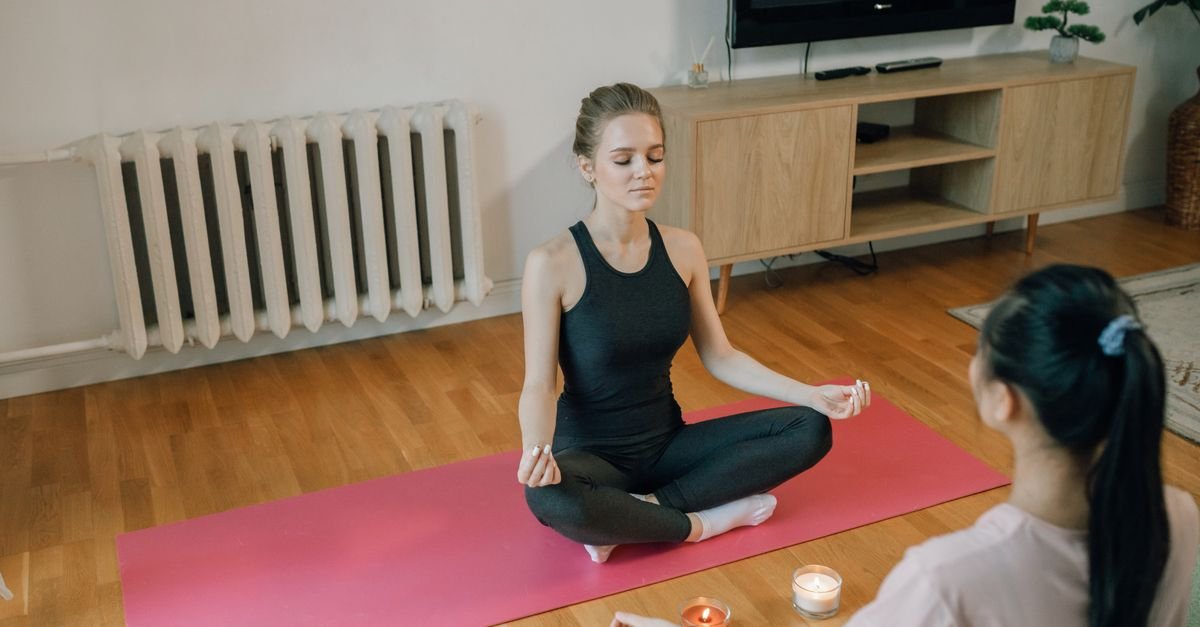
Mindfulness has a reputation for sounding vague or overly spiritual. Strip away the buzzwords and it’s simply the practice of paying attention to the present moment without immediately judging it. You don’t have to sit cross-legged and chant. You can be mindful while washing dishes, walking, or drinking tea.
Meditation is a formal practice of training attention. It can be helpful, but it’s not the only path. If sitting still makes you restless, try a walking meditation. If guided meditations annoy you, listen to a calming playlist and breathe. The point is to notice when your mind wanders and gently bring it back. That’s the rep. That’s the workout.
One-Minute Grounding Exercise
When your mind is spinning, try this: plant your feet on the floor. Notice the pressure. Name five things you can see, four things you can touch, three things you can hear, two things you can smell, and one thing you can taste. Or simplify it: press your palms together and focus on the sensation for five slow breaths.
Grounding doesn’t solve the problem. It helps you come back to the present so you can respond instead of react. It’s like finding the floor when you feel like you’re floating in a storm.
Nature as a Reset Button
Time outside is not a cure-all, but it’s a reliable reset for many people. Sunlight, fresh air, and a change of scenery can shift your mood. You don’t need a mountain hike. Sit on a bench. Walk around the block. Water a plant. Look at the sky. Notice the weather. Let your attention widen beyond the inside of your own head.
When to Seek Professional Support
Self-care is valuable, but it has limits. If you’re struggling to function at work, school, or home, if you feel hopeless or numb for weeks, if you’re using substances to cope, or if you have thoughts of harming yourself, reach out to a professional. That’s not an overreaction. It’s appropriate care.
You don’t need a dramatic crisis to justify therapy. Many people go to therapy to understand themselves better, improve relationships, manage anxiety, or process grief. It’s a tool, not a label.
Therapy Is Not a Last Resort
Therapy can be a place to learn coping skills, untangle old patterns, and get support from someone who isn’t in your daily life. There are different types of therapy, and finding the right fit can take a little trial and error. That’s normal. You’re allowed to ask questions, change providers, or take a break if something isn’t working.
If cost or access is a barrier, look for sliding-scale clinics, community mental health centers, employee assistance programs, support groups, or online options. You deserve support that meets you where you are.
What to Expect in Your First Session
A first therapy session is usually a get-to-know-you conversation. The therapist may ask what brings you in, what you’re hoping to change, and what support you’ve had before. You can ask about their approach, fees, confidentiality, and how they handle scheduling. It’s okay to feel nervous. You don’t have to share everything at once. You’re interviewing each other for a working relationship.
Creating a Sustainable Mental Wellness Routine
The best mental wellness routine is the one you can keep on a bad week. If your plan requires an hour of journaling, two workouts, and a perfect meal prep session every day, it will collapse under real life. That’s not a character flaw. It’s a design problem. Make the routine smaller and more flexible.
The Two-Minute Rule
If a habit feels too hard to start, shrink it until it takes two minutes or less. Want to start meditating? Sit and take three deep breaths. Want to journal? Write one sentence. Want to walk more? Walk to the end of the driveway. Starting is often the hardest part. Once you start, you can always do more. But you don’t have to.
This rule works because it lowers the barrier. It’s easier to repeat a tiny action than to summon motivation for a big one. Over time, tiny actions build identity: “I’m someone who checks in with myself.” That identity is more powerful than a temporary burst of willpower.
Track Progress, Not Perfection
Mental wellness isn’t a straight line. You’ll have good weeks and messy weeks. You’ll forget your routine. You’ll fall back into old patterns. That doesn’t mean you failed. It means you’re human. Track progress by asking questions like: “Am I catching stress earlier? Am I asking for help sooner? Am I speaking to myself with a little more kindness?” Those are meaningful wins.
Keep a simple list of what helps you. When you’re overwhelmed, you won’t want to invent a plan from scratch. You’ll want a menu. Maybe your menu says: take a shower, go outside, text a friend, drink water, stretch, make a cup of tea, put on a comfort show. Keep the menu somewhere easy to find.
Common Myths About Mental Wellness
There’s a lot of noise around mental wellness. Some of it is helpful. Some of it is just marketing. Let’s clear up a few common myths so you can move forward without carrying unnecessary baggage.
Myth: Mental Wellness Means Being Happy All the Time
No. No one is happy all the time, and chasing constant happiness is a fast track to feeling worse. Mental wellness includes the full range of human emotion. It’s about resilience, not permanent sunshine. You can be mentally well and still have a bad day, a sad week, or a messy season. The goal is to feel your feelings without being ruled by them.
Myth: Self-Care Is Selfish
Self-care has been distorted into expensive candles and bubble baths, but real self-care is often unglamorous. It’s going to bed on time. It’s saying no. It’s paying a bill. It’s asking for help. It’s setting a boundary with someone you love. Caring for yourself isn’t selfish because you can’t pour from an empty cup. And even if your cup is full, you’re still allowed to care for yourself. You’re a person, not a utility.
Conclusion
A beginner’s guide to mental wellness isn’t about becoming a perfectly calm person who never struggles. It’s about learning how to support yourself through the reality of being human. Start with sleep, movement, food, and a little emotional honesty. Add boundaries, grounding, and supportive relationships where you can. Ask for help when you need it, and don’t wait for a crisis to deserve care. You don’t have to do everything at once. Pick one small thing. Practice it. Let it be enough for today. Mental wellness is built in ordinary moments, not perfect ones.
FAQs
1. How do I start improving my mental wellness if I feel overwhelmed?
Start with one small action that supports your body: drink water, eat something simple, take a shower, or step outside for two minutes. Then pick one tiny mental wellness habit, like naming one feeling or taking three slow breaths. Overwhelm shrinks when you stop trying to solve everything at once. Choose the next small step, not the whole staircase.
2. Is mental wellness the same as mental health?
They’re related but not identical. Mental health is a broader term that includes your emotional, psychological, and social well-being, along with conditions like anxiety or depression. Mental wellness is more about the daily habits and mindsets that help you cope, recover, and stay connected to yourself. You can think of mental health as the landscape and mental wellness as how you care for it.
3. How long does it take to see changes in mental wellness?
Some changes happen quickly, like the relief of a deep breath or a short walk. Other changes, like building emotional awareness or reducing chronic stress, take weeks or months. Consistency matters more than speed. Small habits repeated over time tend to create the biggest shifts. Be patient with yourself. You’re building a relationship with your mind, not downloading an app.
4. Can mental wellness practices replace therapy?
Not always. Mental wellness practices can support your well-being, but they aren’t a substitute for professional care when you need it. If you’re struggling to function, feeling hopeless, or dealing with trauma or severe anxiety, therapy can be an important part of the picture. Self-care and professional support can work together. You don’t have to choose one or the other.
5. What is the easiest mental wellness habit to start today?
Try a one-minute check-in. Pause, take three slow breaths, and ask yourself, “What am I feeling, and what do I need right now?” You don’t have to fix the answer. Just notice it. This tiny habit builds emotional awareness and gives you a small pause between feeling and reacting. It’s simple, free, and easy to repeat.