Table of Contents
- How to Recognize Ultra-Processed Foods: A Practical Guide for Real Life
- What Exactly Are Ultra-Processed Foods?
- Why It’s Harder Than It Looks to Spot Ultra-Processed Foods
- The Ingredient List: Your Best Detective Tool
- The Processing Spectrum: From Whole to Ultra
- How to Read a Food Label in 30 Seconds
- Common Foods You Might Not Realize Are Ultra-Processed
- Ultra-Processed Foods That Pretend to Be Natural
- Practical Shopping Strategies for Recognizing Ultra-Processed Foods
- What About Bread, Cheese, and Canned Beans?
- The Emotional Side of Cutting Back
- How Ultra-Processed Foods Affect Your Body
- A Simple Checklist You Can Use Today
- Conclusion: Progress Over Perfection
- FAQs About Recognizing Ultra-Processed Foods
How to Recognize Ultra-Processed Foods: A Practical Guide for Real Life
You’re standing in the grocery aisle. A package screams “natural,” “plant-based,” and “high in protein.” It has a green leaf, a sunburst, maybe a picture of a farm. It feels healthy. But behind that glossy label could be a food engineered in a lab to hit your brain’s bliss point. That’s the tricky world of ultra-processed foods. Recognizing them isn’t about becoming a food scientist or reading every label like a legal contract. It’s about learning a few simple clues that cut through the noise.
Think of ultra-processed foods like fast fashion. They look good, cost less, and are everywhere. But the seams show when you look closely. The ingredients tell a story. The packaging tells another. Your job is to learn which story to trust. Let’s walk through it step by step.
What Exactly Are Ultra-Processed Foods?
Ultra-processed foods are industrial creations. They’re made mostly from substances extracted from whole foods, like oils, fats, sugars, starches, and protein isolates. Then they’re blended with additives, colors, flavors, emulsifiers, and preservatives. The result is a product that’s cheap, convenient, shelf-stable, and hyper-palatable. In other words, it’s designed to keep you coming back for more.
This doesn’t mean every packaged food is automatically ultra-processed. A bag of frozen peas is packaged. A can of plain beans is packaged. The difference is the degree of processing and the ingredient list. Ultra-processed foods often contain little or no intact whole food. They’re not just modified; they’re reconstructed.
The NOVA Classification Made Simple
Researchers often use a system called NOVA to sort foods into four groups. Group 1 is unprocessed or minimally processed foods. Think fresh fruits, vegetables, eggs, plain milk, and raw meat. Group 2 is processed culinary ingredients. These are things you use to cook, like oil, butter, sugar, and salt. Group 3 is processed foods. These are made by adding Group 2 ingredients to Group 1 foods. Canned beans, salted nuts, and simple cheese fit here. Group 4 is ultra-processed foods. These are industrial formulations with long ingredient lists and additives you wouldn’t find in a home kitchen.
Why the “Ultra” Label Matters
Why should you care about the “ultra” label? Because study after study links high intakes of ultra-processed foods to obesity, type 2 diabetes, heart disease, some cancers, and even depression. That doesn’t mean one candy bar will harm you. It means the overall pattern matters. Ultra-processed foods tend to be low in fiber, low in protein, high in added sugar, and high in refined fats. They’re easy to overeat because they’re soft, fast, and rewarding. They also tend to push whole foods off your plate.
Why It’s Harder Than It Looks to Spot Ultra-Processed Foods
If ultra-processed foods were labeled in big red letters, we’d all avoid them. But they’re not. They’re wrapped in words that sound wholesome. They’re placed at eye level. They’re marketed as solutions for busy parents, athletes, and health-conscious people. The food industry knows that perception is powerful. Your job is to look past the packaging.
Marketing Words That Muddy the Water
Words like “natural,” “wholesome,” “artisanal,” and “made with real fruit” are not regulated in the way you might think. A product can contain a tiny amount of real fruit and still be mostly sugar, starch, and artificial flavor. “No artificial colors” sounds great, but the food can still be full of refined grains and syrups. “Plant-based” doesn’t mean unprocessed. French fries are plant-based. So are many candies. The front of the package is advertising. The back is information.
The Health Halo Effect
The health halo effect is when one healthy attribute makes you overlook everything else. Organic cookies are still cookies. Gluten-free chips are still chips. Vegan ice cream is still ice cream. These labels can make you feel like you’re making a better choice, and sometimes you are—but not always. A gluten-free product may have more sugar and starch to make up for texture. A vegan burger may be highly processed. The halo shines so bright that you stop reading the ingredient list. Don’t let it blind you.
The Ingredient List: Your Best Detective Tool
If you want to recognize ultra-processed foods, flip the package over. The ingredient list is your best detective tool. It tells you what’s actually inside. The longer the list, the more likely you’re dealing with an ultra-processed product. That’s not a perfect rule, but it’s a strong starting point. A simple yogurt should have milk and cultures. A simple peanut butter should have peanuts and maybe salt. When you see twenty ingredients, ask yourself: why?
Red-Flag Ingredients to Scan For
Certain ingredients are like flashing neon signs. Hydrogenated oils. High-fructose corn syrup. Maltodextrin. Dextrose. Modified starches. Protein isolates. Artificial flavors. Artificial colors. Sweeteners like aspartame, sucralose, and saccharin. Emulsifiers like polysorbate 80 and carboxymethylcellulose. Thickeners like carrageenan and xanthan gum. Humectants like glycerin. These aren’t all dangerous on their own, but they signal industrial processing. When several appear together, you’re almost certainly looking at an ultra-processed food.
Additives Aren’t Always the Villain
Let’s be fair. Not every additive is evil. Some additives keep food safe, like preservatives that prevent mold. Some improve nutrition, like added vitamins in fortified cereals. Some are natural, like citric acid. The problem isn’t one additive. The problem is the overall package: refined ingredients, low fiber, high sugar, high sodium, and a cocktail of additives designed to make the food irresistible and long-lasting. Context matters.
When Additive Cocktails Raise a Warning
When you see five or more additives in one product, your warning bells should ring. Why? Because that’s usually a sign the food has been engineered to mimic real texture, flavor, and color. Real food doesn’t need nine ingredients to taste like strawberries. Real cheese doesn’t need emulsifying salts to melt. Real bread doesn’t need dough conditioners to stay soft for two weeks. An additive cocktail is often a clue that you’re eating a food-like product, not a food.
The Processing Spectrum: From Whole to Ultra
Processing isn’t black and white. It’s a spectrum. On one end, you have an apple. On the other end, you have a neon-blue sports drink. Most foods fall somewhere in between. Understanding the spectrum helps you make decisions without fear.
Unprocessed and Minimally Processed Foods
These are foods close to their natural state. Fresh fruits, vegetables, eggs, fish, plain meat, milk, plain yogurt, beans, lentils, rice, and oats. They may be washed, cut, dried, or frozen, but nothing is added. These foods should make up the bulk of your diet. They’re rich in fiber, vitamins, minerals, and water. They fill you up without hijacking your brain.
Processed Culinary Ingredients
These are ingredients you use to cook. Olive oil, butter, coconut oil, sugar, salt, honey, and maple syrup. They’re not meant to be eaten alone. They’re meant to flavor and cook whole foods. They can be part of a healthy diet when used wisely. The problem starts when they become the main event.
Processed Foods
These are foods made by adding culinary ingredients to whole foods. Canned beans with salt. Cheese made from milk, salt, and cultures. Bread made from flour, water, yeast, and salt. Salted nuts. Canned tuna. These foods are still recognizable as their original form. They can be healthy and convenient. You don’t need to avoid them.
Ultra-Processed Foods
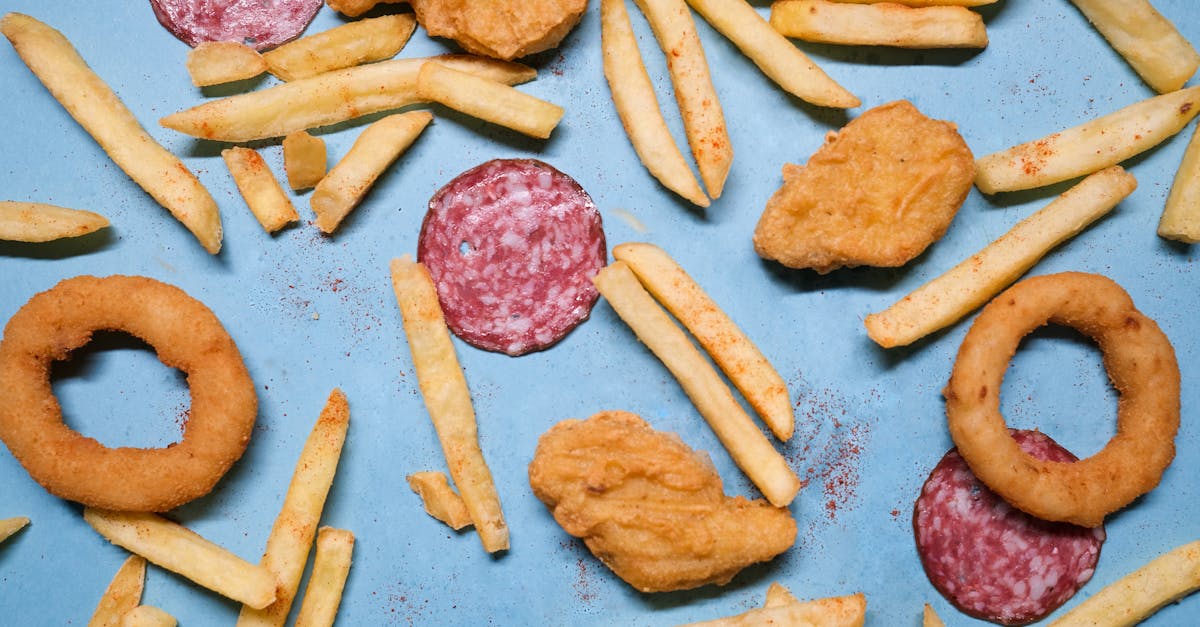
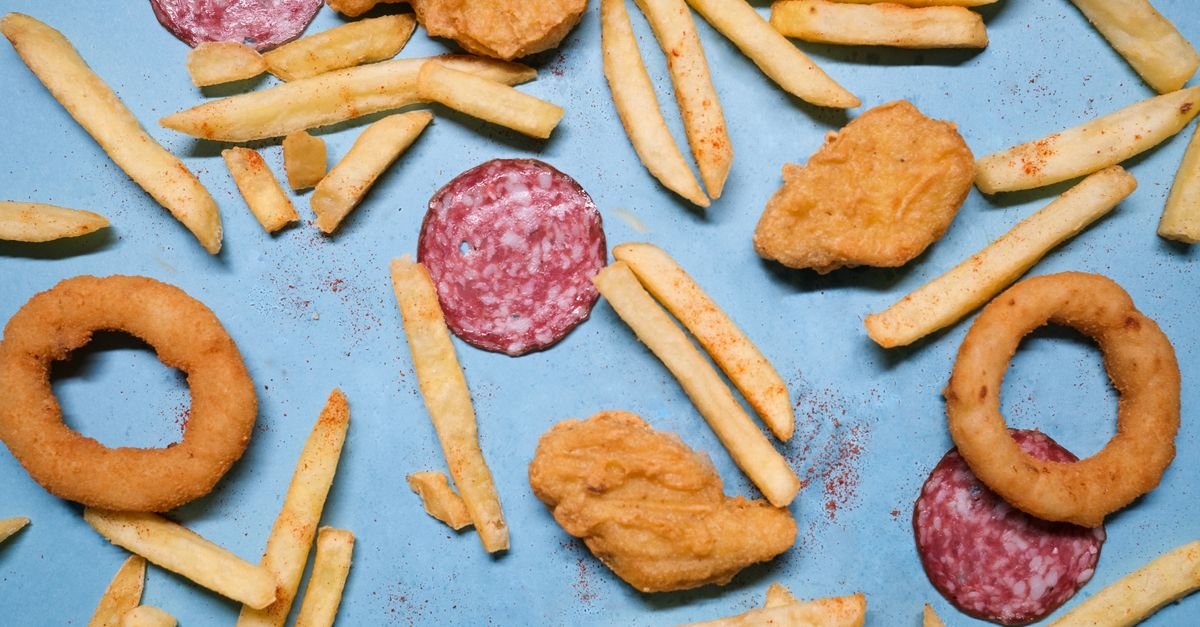
These are industrial formulations. Soda. Chips. Candy. Packaged cookies. Instant noodles. Chicken nuggets. Sweetened breakfast cereals. Flavored yogurt. Mass-produced bread with dough conditioners. Plant-based meat alternatives with long ingredient lists. They often contain little whole food. They’re designed for shelf life, convenience, and craveability. They’re not necessarily poison, but they’re not helping your health either.
How to Read a Food Label in 30 Seconds
You don’t need to spend ten minutes in the aisle. With a little practice, you can size up a product in half a minute. Here’s how.
Step 1: Flip the Package
Ignore the front. The front is marketing. Turn it over and look at the ingredients. That’s where the truth lives. If the front says “made with real cheese,” but the back says “cheese product,” you’ve learned something important.
Step 2: Count the Ingredients
How many ingredients are there? If it’s more than five, pay attention. More than ten? Be suspicious. More than twenty? You’re likely holding an ultra-processed food. This isn’t a strict rule—some healthy foods like trail mix have many ingredients—but it’s a useful filter.
Step 3: Look for Familiar Foods
Can you picture each ingredient? Flour, water, salt, yeast—yes. Sodium caseinate, maltodextrin, natural flavor—not so much. If you can’t imagine the ingredient in a kitchen, it’s probably industrial. That doesn’t automatically make it bad, but it’s a clue.
Step 4: Check for Industrial Markers
Scan for words like isolate, concentrate, syrup, modified, hydrogenated, artificial, and flavor enhancer. These are industrial markers. They show up in ultra-processed foods again and again. When you see them, ask yourself if there’s a simpler alternative.
Common Foods You Might Not Realize Are Ultra-Processed
Some ultra-processed foods are obvious. Others hide in plain sight. Let’s look at a few.
“Healthy” Breakfast Cereals
Many breakfast cereals claim to be heart-healthy, high-fiber, or made with whole grains. But check the label. You might find sugar, corn syrup, maltodextrin, artificial colors, and natural flavors. Even granola can be ultra-processed if it’s held together with glucose syrup and oil. A better bet? Plain oats with fruit and nuts.
Flavored Yogurts and Plant-Based Milks
Plain yogurt is a processed food. Flavored yogurt is often ultra-processed. It can contain sugar, modified starch, gelatin, artificial flavors, and colors. Plant-based milks vary widely. Some are just water, oats, and salt. Others are full of oils, gums, sweeteners, and added vitamins. Compare labels and choose simpler versions.
Protein Bars and Meal Replacements
Protein bars sound like health food. But many are candy bars in disguise. They contain protein isolates, sugar alcohols, fiber syrup, palm oil, artificial flavors, and sweeteners. Meal replacement shakes can be similar. They’re convenient, but they’re not whole foods. Use them as tools, not staples.
Ultra-Processed Foods That Pretend to Be Natural
Some products work hard to look like they came from a farm. Don’t fall for the costume.
The Granola Trap
Granola feels wholesome. Oats, nuts, honey, dried fruit. What could be wrong? Often, it’s the oil, sugar, glucose syrup, soy lecithin, and natural flavors. It can be high in calories and low in fiber. It’s easy to eat too much because it’s crunchy and sweet. Read the label and look for versions with short ingredient lists.
The Veggie Chip Illusion
Veggie chips sound like a health food. But many are mostly potato starch, corn flour, oil, and salt. The “veggie” part might be a powder for color. You’re better off eating actual vegetables. If you want chips, choose ones made from real sliced vegetables and simple oil and salt.
Practical Shopping Strategies for Recognizing Ultra-Processed Foods
You don’t need to overhaul your life overnight. Small changes add up. Try these strategies on your next shopping trip.
Shop the Perimeter First
Most grocery stores put fresh produce, meat, dairy, and fish around the perimeter. The middle aisles hold the ultra-processed foods. That’s not a perfect rule—healthy staples like beans and oats are in the middle—but it’s a good start. Fill your cart with whole foods first, then visit the center aisles for specific items.
Use the 5-Ingredient Rule as a Guide
If a product has more than five ingredients, treat it as a yellow flag. It’s not automatically bad, but it deserves a closer look. Ask yourself: are these ingredients recognizable? Are they mostly whole foods? If not, consider a simpler alternative.
Compare Similar Products
You don’t have to be perfect. Just compare. Two jars of pasta sauce. One has tomatoes, olive oil, garlic, and salt. The other has sugar, soybean oil, modified starch, and natural flavor. Choose the one with the shorter, simpler list. Small swaps like this can cut a lot of ultra-processed food from your diet.
What About Bread, Cheese, and Canned Beans?
These foods confuse people. Are they processed or ultra-processed? It depends.
Bread: It Depends on the Loaf
Traditional bread is flour, water, yeast, and salt. That’s a processed food, not ultra-processed. But many commercial breads contain dough conditioners, emulsifiers, preservatives, added sugar, and soybean oil. That pushes them into ultra-processed territory. Look for bakery bread with a short ingredient list.
Cheese: Real vs. Processed Cheese Product
Real cheese is made from milk, salt, cultures, and rennet. It’s a processed food. Processed cheese product is different. It contains milk protein concentrate, emulsifying salts, whey, colors, and flavors. That’s ultra-processed. If the label says “cheese product,” take note.
Canned Beans: Often a Smart Shortcut
Canned beans are usually just beans, water, and salt. That’s a processed food, and a healthy convenience food. But flavored baked beans may contain sugar, modified starch, and natural flavors. Check the label. Plain canned beans are a great pantry staple.
The Emotional Side of Cutting Back
Food isn’t just fuel. It’s pleasure, culture, comfort, and memory. If you try to eliminate every ultra-processed food, you’ll likely feel deprived and stressed. That’s not the goal.
Don’t Aim for Perfect
You don’t have to be 100% clean. That’s not realistic. The goal is to shift the balance. Eat more whole foods. Cook more often. Read labels when you can. Let ultra-processed foods be occasional, not foundational. Progress beats perfection every time.
Swap, Don’t Shame
Instead of shaming yourself for eating chips, swap them for something you enjoy just as much. Maybe it’s popcorn with olive oil. Maybe it’s a handful of nuts. Maybe it’s a homemade cookie. Swapping is kinder and more sustainable than restriction. You’re not banning foods; you’re choosing better options most of the time.
How Ultra-Processed Foods Affect Your Body
Why do ultra-processed foods get so much attention? Because they seem to affect how we eat, not just what we eat.
Hyper-Palatability and Cravings
Ultra-processed foods are engineered to be hyper-palatable. That means they combine fat, sugar, salt, and refined carbs in ratios that don’t exist in nature. They hit the reward centers in your brain hard. You eat them fast. You don’t feel full. You want more. This isn’t a lack of willpower. It’s biology meeting clever design.
Fiber, Protein, and Satiety
Whole foods contain fiber and protein that help you feel full. Ultra-processed foods often have those nutrients stripped out or added back in isolated forms. The result is a food that’s easy to chew, easy to swallow, and easy to overeat. You can eat hundreds of calories and still feel hungry an hour later. That’s a recipe for weight gain and poor health.
A Simple Checklist You Can Use Today
Next time you shop, run through this quick checklist:
- Is the ingredient list longer than five items?
- Do you see ingredients you don’t recognize?
- Are there industrial markers like isolates, syrups, or modified starches?
- Does the package make big health claims on the front?
- Could you make this food in your own kitchen?
- Would it stay fresh for months on a shelf?
If you answer yes to several of these, it’s probably ultra-processed. That doesn’t mean you can never eat it. It means you now know what you’re choosing.
Conclusion: Progress Over Perfection
Recognizing ultra-processed foods is a skill, not a moral test. You don’t need to be perfect. You just need to be curious. Flip the package. Read the ingredients. Ask simple questions. The more you practice, the easier it becomes. You’ll start to notice how many foods are engineered to look healthy while being anything but. You’ll also notice that real food can be just as convenient when you plan a little. So take a breath, take your time, and take small steps. Your body, your brain, and your grocery cart will thank you.
FAQs About Recognizing Ultra-Processed Foods
1. Are all ultra-processed foods bad for you?
No. Some ultra-processed foods can be helpful, like fortified cereals for people with limited diets or affordable plant-based options. The issue is the overall pattern. If most of your calories come from ultra-processed foods, you may miss out on fiber, vitamins, and minerals. Enjoy them sometimes, but build your diet around whole foods.
2. Is canned food always ultra-processed?
Not at all. Canned beans, tomatoes, tuna, and plain vegetables are usually processed foods, not ultra-processed. They often contain just the food, water, and salt. Flavored or sauced canned foods may have added sugar, modified starch, and natural flavors. Check the label.
3. What is the easiest way to tell if a food is ultra-processed?
Look at the ingredient list. If it’s long, contains many additives, and includes ingredients you wouldn’t find in a home kitchen, it’s likely ultra-processed. A good rule of thumb: if you can’t picture making it from scratch, it’s probably ultra-processed.
4. Can I eat ultra-processed foods and still be healthy?
Yes. Health is about your overall diet and lifestyle, not one food. You can enjoy ultra-processed foods occasionally and still be healthy. The key is balance. Fill most of your plate with whole and minimally processed foods, and let ultra-processed foods be a small part of the picture.
5. Why do some experts disagree about ultra-processed foods?
The definition of ultra-processed food is broad, and research is still evolving. Some experts focus on nutrients like sugar, salt, and fat. Others focus on processing itself. There’s also industry influence and disagreement about how to classify certain foods. Most experts agree, however, that eating more whole foods and fewer ultra-processed foods is a smart move.