Table of Contents
- Food Safety Mistakes That Start During Meal Prep
- The Hidden Risks in Your Meal Prep Routine
- Why Meal Prep Is a Critical Food Safety Window
- Mistake #1: Skipping the Handwash Before You Touch Anything
- The 20-Second Rule That Actually Matters
- When Hand Sanitizer Is Not Enough
- Mistake #2: Not Cleaning Your Countertops and Tools First
- Sponges, Towels, and Cutting Boards: The Dirty Trio
- The Right Way to Sanitize Meal Prep Surfaces
- Mistake #3: Cross-Contamination Between Raw Meat and Produce
- Separate Cutting Boards Are Non-Negotiable
- Watch the Knife, Tongs, and Your Phone
- Mistake #4: Thawing Food on the Counter
- Safe Thawing Methods That Save Dinner
- Why the Danger Zone Is a Real Danger
- Mistake #5: Washing Raw Chicken
- The Splash Zone You Cannot See
- What to Do Instead of Rinsing Poultry
- Mistake #6: Rinsing Produce at the Wrong Time or Wrong Way
- When to Wash Fruits and Vegetables
- Produce That Needs Extra Care
- Mistake #7: Letting Perishables Sit Out Too Long
- The Two-Hour Rule and the One-Hour Summer Exception
- Meal Prep Batching Without Bacteria Breeding
- Mistake #8: Overpacking the Fridge and Cooling Food Too Slowly
- Hot Food in the Fridge: Yes, But Do It Right
- Shallow Containers Are Your Friend
- Mistake #9: Reusing Marinades and Tasting as You Go
- The Spoon You Licked Should Never Go Back In
- Boiling Marinades Before Reuse
- Mistake #10: Ignoring Temperature Checks Because You “Know” It’s Done
- Safe Internal Temperatures You Should Memorize
- How to Use a Meat Thermometer Correctly
- Mistake #11: Storing Leftovers in Any Random Container
- Airflow, Seals, and Labeling Matters
- How Long Is Too Long in the Fridge?
- Mistake #12: Cleaning Up in the Wrong Order
- Dirty to Clean, Not Clean to Dirty
- Final Sanitizing Swipe
- How to Build a Safer Meal Prep Workflow
- Step 1: Plan Your Menu Around Risk
- Step 2: Shop and Store with Food Safety in Mind
- Step 3: Prep in Zones
- Step 4: Chill Fast and Label Everything
- Food Safety Myths That Need to Go
- “If It Smells Fine, It’s Safe”
- “A Little Pink Is No Big Deal”
- “Organic Food Doesn’t Need Washing”
- Conclusion
- FAQs
- Can I meal prep raw meat and vegetables on the same day?
- How long can cooked meal prep sit out before refrigerating?
- Is it safe to reheat meal prep more than once?
- Do I need to wash eggs before cooking?
- What’s the safest way to cool a big pot of soup?
Food Safety Mistakes That Start During Meal Prep
You’ve got the containers, the grocery list, the playlist, and the noble intention to eat better this week. Meal prep feels like a productivity flex. But here’s the plot twist: the riskiest part of your week might not be the cooking. It’s the little habits you repeat while chopping, thawing, tasting, and packing. Food safety mistakes during meal prep are sneaky. They don’t announce themselves with a siren. They hide in a quick rinse of chicken, a shared cutting board, a warm container of rice cooling on the counter. And later, they can turn your best-laid lunch into a miserable night.
Let’s walk through the most common food safety mistakes that start during meal prep—and how to fix them without turning your kitchen into a sterile laboratory.
The Hidden Risks in Your Meal Prep Routine
Meal prep is basically a mini restaurant operation. You’re handling raw ingredients, cooking in batches, cooling food, and storing it for later. That’s a lot of opportunities for bacteria to catch a ride. The scary part? Most contamination doesn’t change the taste, smell, or look of your food. You can’t see Salmonella or Listeria throwing a party on your cutting board.
Think of bacteria like uninvited guests. They show up when conditions are warm, moist, and comfortable. Your job is to make your kitchen as unwelcoming as possible. That means keeping things clean, cold, or hot—and never letting them linger in the middle.
Why Meal Prep Is a Critical Food Safety Window
When you cook one meal and eat it right away, there’s less time for mistakes to snowball. Meal prep stretches the timeline. You might cook chicken on Sunday, portion it into containers, and eat it on Wednesday. Every step in between matters. If you leave that chicken in the danger zone too long, or drip its juices onto your salad greens, you’ve created a risk that follows you for days.
The good news? Small changes make a huge difference. You don’t need to be perfect. You just need to be consistent.
Mistake #1: Skipping the Handwash Before You Touch Anything
Your hands are the most-used tool in the kitchen. They open the fridge, touch the faucet, grab the salt, scratch your nose, and then handle food. If you skip a proper handwash, you’re basically using your fingers as a bacteria taxi.
The 20-Second Rule That Actually Matters
Wet your hands, lather with soap, and scrub for at least 20 seconds. That’s roughly the time it takes to sing “Happy Birthday” twice. Don’t forget the backs of your hands, between your fingers, and under your nails. Rinse and dry with a clean towel or paper towel.
Wash before you start prepping, after touching raw meat, poultry, seafood, or eggs, after using the bathroom, after handling garbage, and after touching your phone or pet. Yes, your phone is a germ magnet.
When Hand Sanitizer Is Not Enough
Hand sanitizer is handy in a pinch, but it doesn’t remove dirt, grease, or certain germs. If your hands are visibly dirty or you’ve just handled raw meat, soap and water win every time. Sanitizer is a backup singer, not the lead.
Mistake #2: Not Cleaning Your Countertops and Tools First
You wouldn’t chop vegetables on a dirty bathroom floor, right? Your countertop can be just as gross if you don’t clean it before prep. Crumbs, spills, and bacteria from yesterday’s dinner can hitch a ride onto today’s food.
Sponges, Towels, and Cutting Boards: The Dirty Trio
Sponges are like tiny bacteria hotels. They stay damp, collect food particles, and get used over and over. Microwave a wet sponge for one minute or run it through the dishwasher regularly. Replace it often. Dish towels can also spread germs—use separate towels for drying hands, drying dishes, and wiping counters.
Cutting boards need special attention. Deep cuts from knives can trap bacteria. If your board is heavily scarred, it might be time to retire it.
The Right Way to Sanitize Meal Prep Surfaces
First, clean with hot soapy water to remove grime. Then sanitize with a kitchen-safe sanitizer or a diluted bleach solution. Let it air dry or wipe with a clean paper towel. Don’t just swipe and go—give the sanitizer a moment to do its job.
Mistake #3: Cross-Contamination Between Raw Meat and Produce
Cross-contamination is the villain of meal prep. It happens when raw meat juices touch ready-to-eat foods like salad greens, fruit, or cooked leftovers. Those foods won’t be cooked again, so the bacteria stay alive and ready to cause trouble.
Separate Cutting Boards Are Non-Negotiable
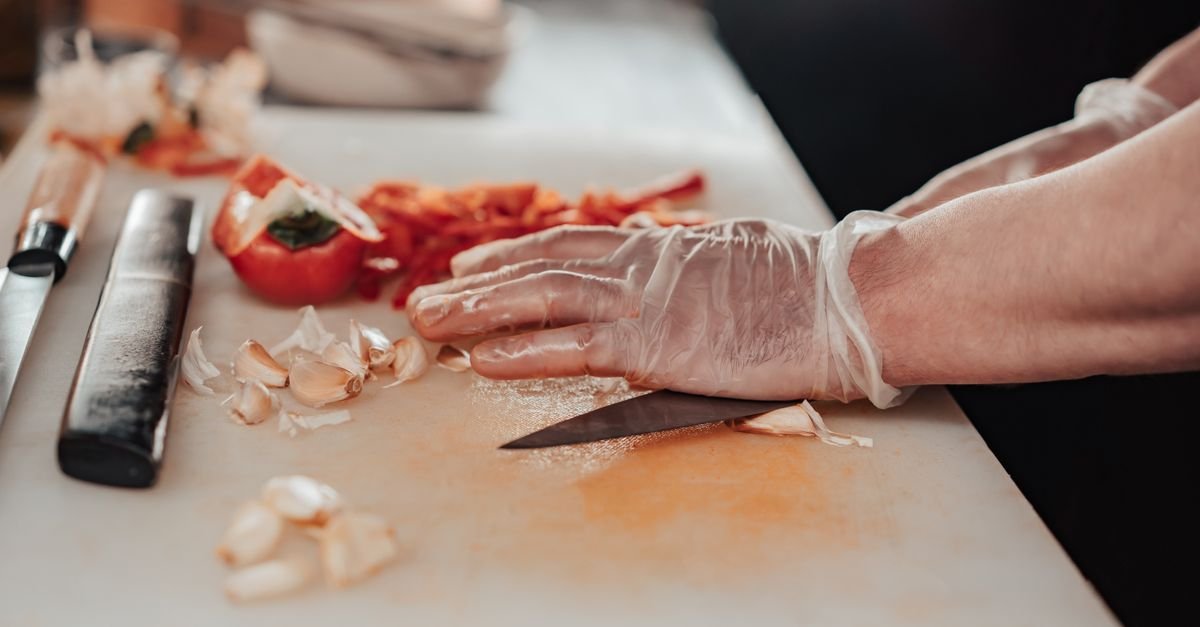
Use one cutting board for raw meat, poultry, and seafood, and another for produce and ready-to-eat foods. Color-coded boards make this easy. If you only have one board, wash and sanitize it thoroughly between tasks. Don’t just flip it over—juices can drip down the sides.
Watch the Knife, Tongs, and Your Phone
Your knife touches raw chicken, then you use it to slice tomatoes. That’s cross-contamination. Your tongs touch raw steak, then you use them to serve cooked meat. Same problem. Even your phone can be a culprit if you scroll through a recipe with raw-meat hands and then touch other ingredients.
Keep a mental “dirty zone” for raw animal products. Wash and sanitize anything that leaves that zone before it touches ready-to-eat food.
Mistake #4: Thawing Food on the Counter
Thawing frozen chicken on the counter feels normal because our grandparents did it. But it’s a food safety gamble. The outside of the food warms up faster than the inside, lingering in the danger zone where bacteria multiply quickly.
Safe Thawing Methods That Save Dinner
There are three safe ways to thaw food: in the refrigerator, in cold water, or in the microwave. In the fridge, plan ahead—large items can take a day or more. In cold water, keep the food in a leak-proof bag and change the water every 30 minutes. In the microwave, cook the food immediately after thawing.
Why the Danger Zone Is a Real Danger
The danger zone is between 40°F and 140°F (4°C and 60°C). Bacteria can double every 20 minutes in that range. That’s not a slow crawl—it’s a population explosion. Keep cold foods cold and hot foods hot, and don’t let anything sit in the middle for long.
Mistake #5: Washing Raw Chicken
This one surprises people. Rinsing raw chicken under the tap doesn’t clean it—it spreads bacteria. The splash can send Campylobacter and Salmonella onto your sink, counter, sponge, and nearby dishes.
The Splash Zone You Cannot See
Those tiny water droplets are like invisible paint. They land on surfaces up to three feet away. You won’t notice them, but they’re there. Then you set a clean plate in the splash zone, and suddenly your “clean” plate isn’t so clean.
What to Do Instead of Rinsing Poultry
Skip the rinse. If the chicken is slimy, pat it dry with a paper towel and throw the towel away immediately. Wash your hands and any surfaces that touched the raw chicken. Cooking to the right internal temperature kills the bacteria—that’s your real safety net.
Mistake #6: Rinsing Produce at the Wrong Time or Wrong Way
Fruits and vegetables can carry bacteria from soil, water, or handling. But washing them at the wrong time can make them spoil faster. Washing them the wrong way can spread germs instead of removing them.
When to Wash Fruits and Vegetables
Wash produce right before you eat or prep it. If you wash berries and then store them wet, they’ll mold quickly. If you wash leafy greens and leave them damp, they’ll turn slimy. For meal prep, wash only what you’ll use that day or dry it thoroughly before storing.
Produce That Needs Extra Care
Rinse under running water. For firm produce like cucumbers, apples, and potatoes, scrub with a clean produce brush. For leafy greens, separate the leaves and rinse each one. Don’t use soap or bleach—produce is porous, and those chemicals aren’t meant to be eaten.
Mistake #7: Letting Perishables Sit Out Too Long
During meal prep, it’s easy to lose track of time. You’re chopping vegetables, cooking rice, grilling chicken, and suddenly two hours have passed. Meanwhile, the raw meat, dairy, and cooked food have been sitting on the counter, getting warmer and more bacteria-friendly.
The Two-Hour Rule and the One-Hour Summer Exception
Perishable food should not sit out for more than two hours. If the room or outdoor temperature is above 90°F, that window shrinks to one hour. After that, the risk of foodborne illness climbs fast. When in doubt, throw it out.
Meal Prep Batching Without Bacteria Breeding
Work in batches. Keep ingredients you’re not actively using in the fridge. Cook one protein at a time, then cool and store it before moving on. If you’re prepping several meals, don’t leave everything out like a buffet. Your future self will thank you.
Mistake #8: Overpacking the Fridge and Cooling Food Too Slowly
A packed fridge feels efficient, but it can block cold air from circulating. If hot food is packed in tight, it cools slowly and can raise the temperature around other foods. That’s a recipe for bacterial growth.
Hot Food in the Fridge: Yes, But Do It Right
You can put hot food in the fridge, but divide it into smaller portions first. Don’t put a giant pot of soup on the shelf and hope for the best. The fridge will work overtime, and the soup’s center may stay warm for hours.
Shallow Containers Are Your Friend
Use shallow containers to increase surface area and speed cooling. Stir soups and stews occasionally. You can also set the container in an ice bath before refrigerating. The goal is to get food from 135°F to 70°F within two hours, and then to 40°F within four more hours.
Mistake #9: Reusing Marinades and Tasting as You Go
Marinades are delicious, but they’ve been swimming with raw meat. If you brush that same marinade onto cooked food, you’re reintroducing bacteria. And if you taste with a spoon and dip it back in, you’re basically sharing your saliva with the whole batch.
The Spoon You Licked Should Never Go Back In
Use a clean spoon for every taste. If you need to taste again, grab another spoon. It’s a tiny habit that prevents a big problem. Your dinner guests will never know, but their stomachs will appreciate it.
Boiling Marinades Before Reuse
If you want to use marinade as a sauce, boil it first. Bring it to a rolling boil for at least one minute to kill any bacteria from the raw meat. Or set aside a portion of the marinade before adding raw meat, so you have a clean batch for later.
Mistake #10: Ignoring Temperature Checks Because You “Know” It’s Done
Color is not a reliable indicator of doneness. A chicken breast can look white and still be undercooked. A burger can look brown and still harbor bacteria. The only way to know is to check the internal temperature with a food thermometer.
Safe Internal Temperatures You Should Memorize
- Poultry, including ground chicken and turkey: 165°F (74°C)
- Ground meats like beef, pork, and lamb: 160°F (71°C)
- Whole cuts of beef, pork, lamb, and veal: 145°F (63°C) with a 3-minute rest
- Fish and shellfish: 145°F (63°C)
- Leftovers and casseroles: 165°F (74°C)
How to Use a Meat Thermometer Correctly
Insert the thermometer into the thickest part of the food, avoiding bone, fat, and gristle. For thin items like burgers, insert from the side. Clean the thermometer with hot soapy water before and after each use. A good thermometer costs less than a takeout dinner and pays for itself in peace of mind.
Mistake #11: Storing Leftovers in Any Random Container
Not all containers are created equal. A flimsy container that doesn’t seal can let air in, causing freezer burn and faster spoilage. A huge container with a tiny amount of food can cool too slowly. And unlabeled containers become mystery meals that you’re afraid to eat.
Airflow, Seals, and Labeling Matters
Use containers with tight-fitting lids. Glass or BPA-free plastic both work. Leave a little headspace for expansion if you’re freezing. Label with the food name and date. Trust me, “brown stuff” is not a helpful label.
How Long Is Too Long in the Fridge?
Cooked leftovers generally keep for three to four days in the fridge. If you won’t eat them by then, freeze them. Frozen leftovers are best within two to three months for quality, though they can stay safe longer. Reheat to 165°F and enjoy.
Mistake #12: Cleaning Up in the Wrong Order
You’ve cooked, eaten, and now you’re tired. Cleaning up feels like a chore, so you wipe the counter with the same sponge you used on the raw chicken board. That’s like mopping a floor with muddy water.
Dirty to Clean, Not Clean to Dirty
Clean the dirtiest areas first—raw meat prep zones—then move to cleaner areas. Wash dishes with hot soapy water. Sanitize countertops after cleaning. If you used a sponge on raw meat juices, microwave it wet for one minute or replace it.
Final Sanitizing Swipe
After everything is clean, do a final sanitizing swipe on counters, handles, and the faucet. These high-touch spots are easy to forget. A clean kitchen isn’t just about looks—it’s about breaking the chain of contamination.
How to Build a Safer Meal Prep Workflow
Food safety doesn’t have to be complicated. A simple workflow can help you avoid mistakes without slowing you down.
Step 1: Plan Your Menu Around Risk
If you’re prepping raw chicken, plan to cook it first. Then clean and sanitize before moving to produce. If you’re making salads, prep them last. Think about which foods are ready-to-eat and which need cooking.
Step 2: Shop and Store with Food Safety in Mind
At the grocery store, keep raw meat separate from produce in your cart. Put raw meat in a plastic bag to catch leaks. At home, store raw meat on the bottom shelf of the fridge so juices don’t drip onto other foods. Use the fridge thermometer to confirm it’s below 40°F.
Step 3: Prep in Zones
Create a clean zone for produce and ready-to-eat foods, and a dirty zone for raw animal products. Use separate boards, knives, and utensils. Wash hands when moving between zones. It sounds fussy, but it becomes second nature fast.
Step 4: Chill Fast and Label Everything
Cool food quickly in shallow containers. Label with the date. Keep the fridge organized so older items get eaten first. A little planning now prevents a lot of waste later.
Food Safety Myths That Need to Go
There are plenty of old wives’ tales about food safety. Let’s bust a few.
“If It Smells Fine, It’s Safe”
Pathogenic bacteria like Salmonella and E. coli don’t usually produce a smell. Food can look and smell perfectly normal and still make you sick. Date labels and temperature rules are better guides.
“A Little Pink Is No Big Deal”
Pink color can be caused by cooking method, nitrates, or even the age of the meat. It’s not a reliable doneness indicator. Use a thermometer. For ground meats, pink can be especially risky.
“Organic Food Doesn’t Need Washing”
Organic produce can still carry soil, bacteria, and natural fertilizers. Wash it under running water just like conventional produce. Organic doesn’t mean sterile.
Conclusion
Meal prep is a fantastic way to save time, money, and stress. But it only works if your food is safe to eat. The mistakes that start during meal prep—dirty hands, cross-contamination, slow cooling, and skipped temperature checks—are easy to overlook. They’re also easy to fix.
Start with one habit. Wash your hands properly. Use separate cutting boards. Thaw food in the fridge. Check that chicken with a thermometer. Cool leftovers quickly. These small moves add up to a safer kitchen and a healthier you. Your future self—and your stomach—will thank you.
FAQs
Can I meal prep raw meat and vegetables on the same day?
Yes, but do it in the right order. Prep vegetables first, then raw meat, or use separate zones and tools. Clean and sanitize everything between tasks. Never let raw meat juices touch produce that won’t be cooked.
How long can cooked meal prep sit out before refrigerating?
No more than two hours. If the room is above 90°F, cut that to one hour. Bacteria multiply quickly in the danger zone, so cool and refrigerate promptly.
Is it safe to reheat meal prep more than once?
Ideally, reheat only what you’ll eat. Repeated heating and cooling gives bacteria more chances to grow. If you must reheat twice, do it quickly and bring the food to 165°F each time.
Do I need to wash eggs before cooking?
In the United States, commercially sold eggs are already washed and sanitized. Washing them again at home can remove the protective coating and increase risk. Just cook them thoroughly and wash your hands after handling.
What’s the safest way to cool a big pot of soup?
Divide the soup into shallow containers. You can also place the pot in an ice bath and stir to speed cooling. Refrigerate within two hours, and make sure it reaches 40°F quickly. Don’t put a huge hot pot directly on a fridge shelf—it can warm nearby foods.